
Why we stitch the apron by hand
The seam around the front of a moccasin is the shoe. Here is why a machine cannot do it well, and what that means for how the pair feels on day one.
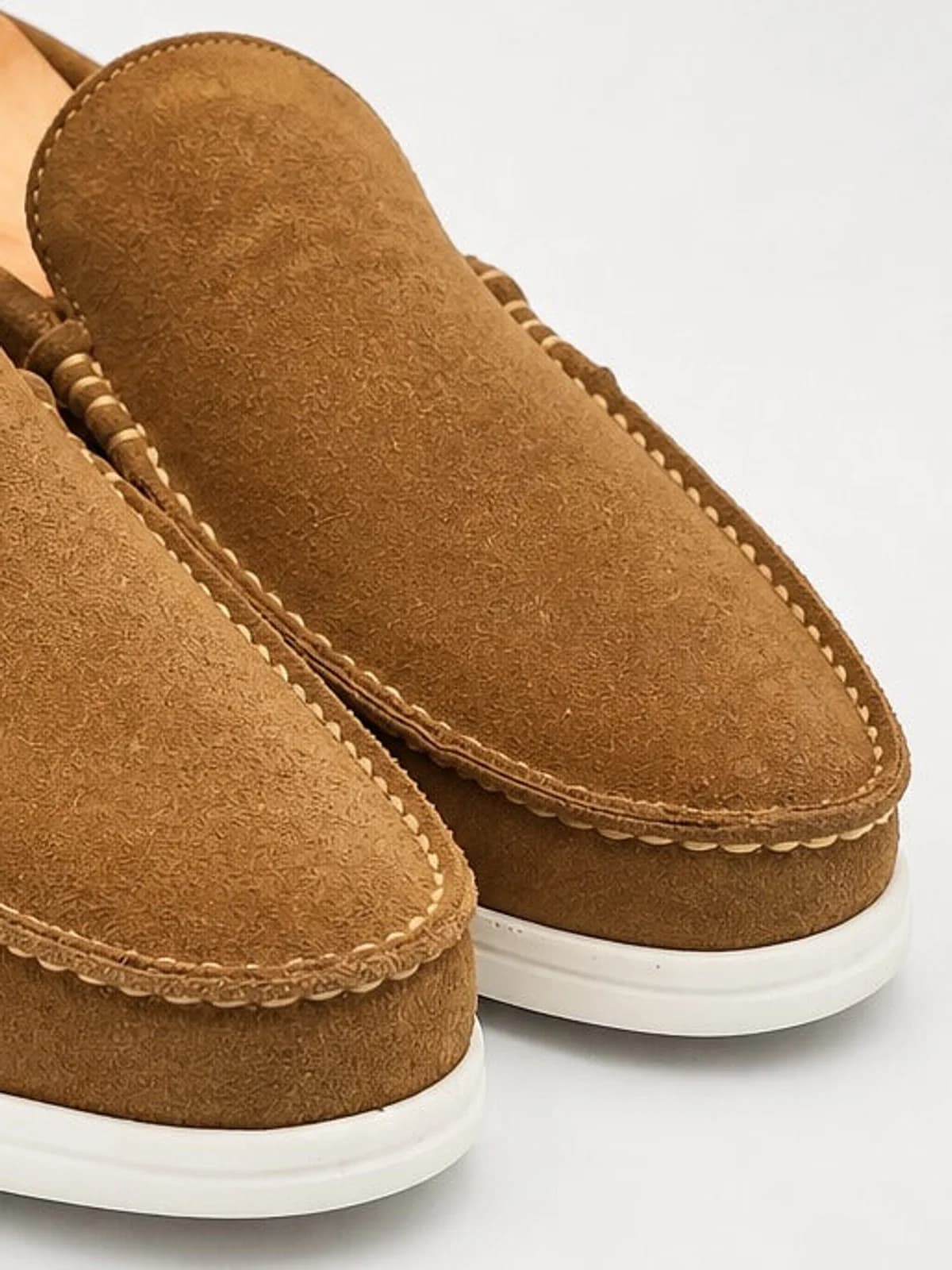
Look at the front of a loafer and you will see a raised seam running around the top of the toe, joining the apron — the panel that sits over the top of your foot — to the rest of the upper. On a true moccasin that seam is not decoration. It is the structure.
A moccasin is built the opposite way round
Most shoes are built by pulling an upper down over a last and attaching it to a separate sole underneath. A moccasin is built the other way: one piece of leather wraps under the foot and comes up around the sides, and the apron is stitched into it from above.
That means there is no rigid board between your foot and the ground, which is why a well-made moccasin feels soft immediately instead of needing weeks to break in. It also means the apron seam is carrying real load. If that seam is loose, the shoe loses its shape within a season. If it is too tight, the leather puckers and the toe sits wrong.
What a machine cannot do
The apron seam is a tight, continuously changing curve, and the two pieces of leather meeting along it are under different tension at every point. A machine holds one tension setting. It will run that setting the whole way round, which is fine on the straight sections and wrong at the tightest part of the curve — usually right at the toe, where it matters most.
A person stitching by hand adjusts as they go. They feel where the leather wants to gather and ease it in, they pull harder where the panel needs to be drawn tight, and they stop when the hide tells them to. Two needles work the same hole from opposite sides, so each stitch locks against the one before it. If a thread is ever cut, the seam holds instead of unzipping the way a machine lockstitch does.
It is slower, and that is the whole cost
Hand-stitching an apron takes an experienced maker a meaningful part of a working day, and it cannot be rushed without showing. That labour is most of the difference between a shoe that is genuinely hand-stitched and one that is machine-run and finished to look like it.
It is also the part most often faked. A moulded ridge pressed into the leather, or a decorative row of stitching that does not actually join two panels, gives you the look with none of the construction. It photographs the same. It does not wear the same.
How to tell
Look closely at the stitches around the tightest part of the toe. Hand-stitching is slightly irregular — the spacing shifts a fraction as the curve tightens, because a person was responding to the leather. Machine stitching is perfectly even everywhere, which sounds better and is actually the tell.
Then look at whether the seam is doing a job. Press gently on the apron. On a real moccasin you should feel it pull against the panel it is sewn to. On a decorative one, nothing moves.
It is a small detail, on a part of the shoe most people never examine. It is also the difference between a pair that keeps its shape for years and one that goes soft and shapeless by the second summer.
Keep reading
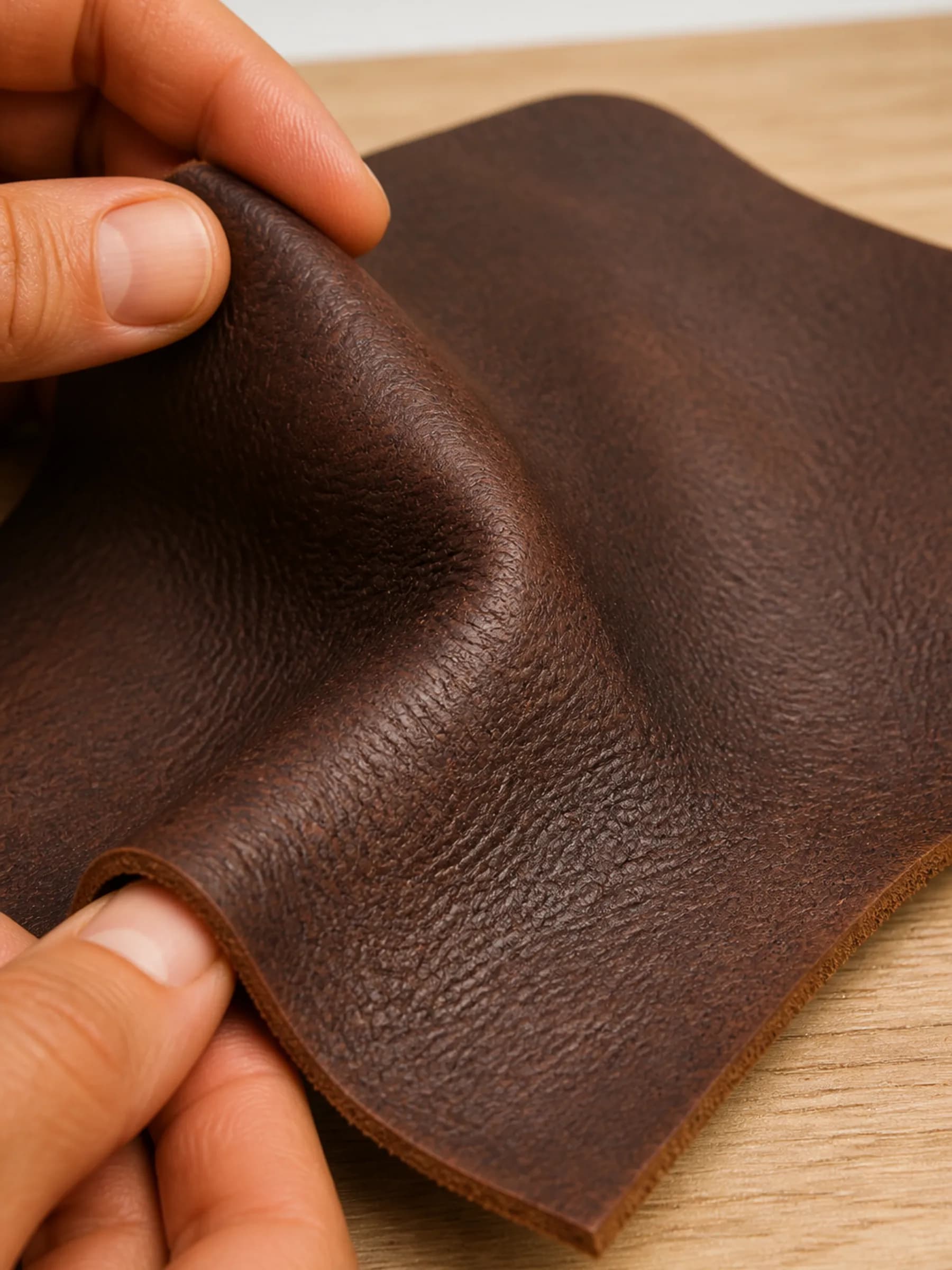
Full-grain leather is supposed to change
The creases across the front of a new pair are not a fault. They are the clearest evidence you did not buy corrected leather.
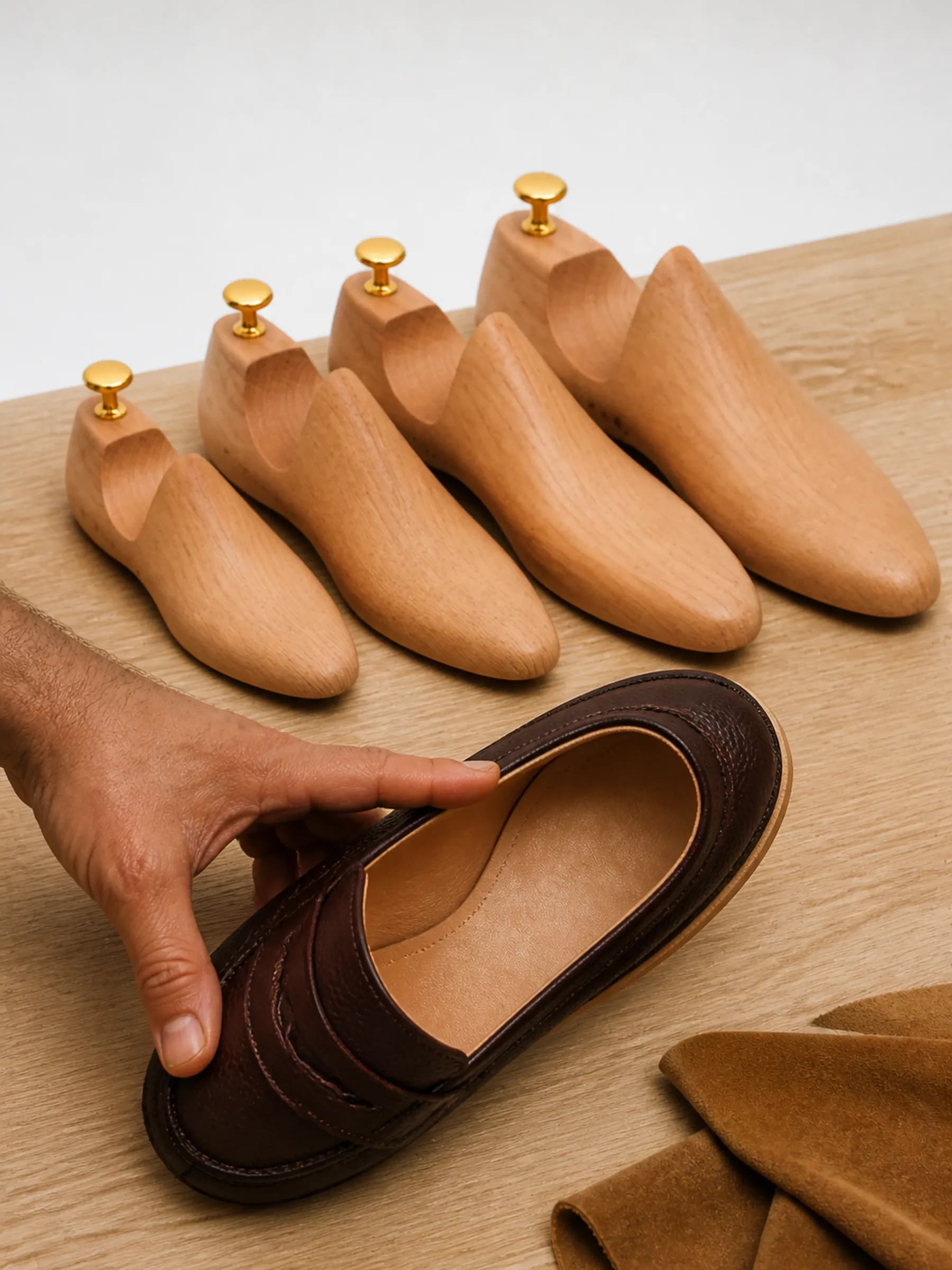
Suede in the Gulf
Heat, dust and air conditioning are harder on a suede loafer than rain ever was. What actually keeps a pair alive in the UAE.