
Suede in the Gulf
Heat, dust and air conditioning are harder on a suede loafer than rain ever was. What actually keeps a pair alive in the UAE.
Most suede care advice is written for a wet European winter. That is not the problem here. In the UAE a pair of suede loafers is fighting fine dust, hard sun, salt air near the coast, and the swing between forty degrees outside and a chilled office. Each of those does something different to the nap.
Brush dry, and brush often
The nap is the raised fibre on the surface of the hide. It is what gives suede its depth, and it is the first thing to go. Dust settles into it and flattens it, and once it is flattened the shoe reads dull and grey rather than rich.
A soft brass or rubber suede brush, thirty seconds, in one direction, after every few wears. Do it dry. Never take water to suede as a first response — water carries the dust deeper and leaves a tidemark when it dries.
Protect before the first wear, not after the first stain
A suede protector spray puts an invisible barrier over the fibre so oil and water bead instead of soaking in. It costs a fraction of the shoe and it is the single highest-return thing you can do. Apply it before the first wear, from about 20cm away, two light passes rather than one heavy one, and let it dry for a few hours somewhere out of direct sun.
Reapply every couple of months if the pair is in regular rotation.
Rest the pair, always
This matters more in Gulf heat than anywhere. Feet sweat, the moisture goes into the lining and the footbed, and leather that stays damp breaks down from the inside. Wearing the same pair two days running is the fastest way to age a shoe.
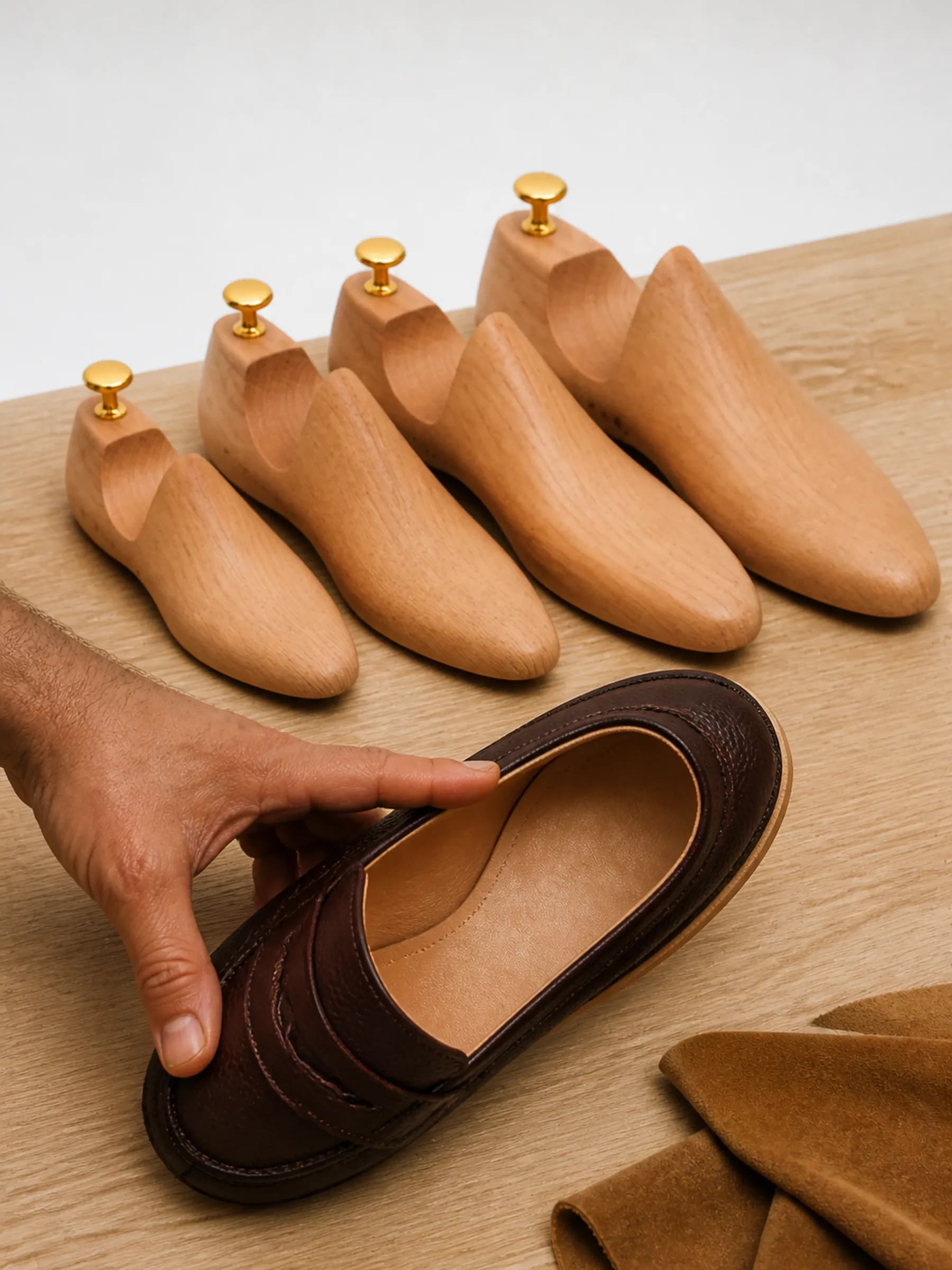
Give every pair twenty-four hours off. Use cedar trees if you have them — they pull moisture out and hold the shape while the leather dries. If you do not, at least keep the shoes somewhere with moving air, not sealed in a box or a plastic bag.
The car is the worst place you can leave them
A car parked in Dubai summer sun gets far hotter than the leather was ever tanned to handle. It dries out the hide, can lift the adhesive around the sole, and will shrink a lining. Do not store shoes in the boot.
When something does mark it
Let it dry completely first. Almost every panicked attempt to fix wet suede makes it worse.
Once dry, work at it with the brush. A dry scuff will often lift out entirely. For a shiny patch where the nap has been crushed flat, a suede eraser — or a clean pencil eraser — will raise it again. For oil, cover the mark in cornflour, leave it overnight to draw the oil out, then brush it away.
Salt water is the one that needs speed. If you catch a splash from the beach, rinse the area with a barely damp cloth before it dries, then let it dry naturally away from heat and brush it back up. Salt left in the fibre will bleach a pale ring into the colour.
What not to do
No polish, no wax, no cream. Those are for smooth leather and they will permanently mat the nap. No hairdryer and no direct sun to speed up drying — heat is what cracks leather. And no washing machine, ever, whatever the internet tells you.
Suede is not delicate. It is just specific. Brush it, protect it, rest it, and a pair will outlast several seasons of the shoes it sits next to.
Keep reading
Full-grain leather is supposed to change
The creases across the front of a new pair are not a fault. They are the clearest evidence you did not buy corrected leather.
Why we stitch the apron by hand
The seam around the front of a moccasin is the shoe. Here is why a machine cannot do it well, and what that means for how the pair feels on day one.