
Full-grain leather is supposed to change
The creases across the front of a new pair are not a fault. They are the clearest evidence you did not buy corrected leather.
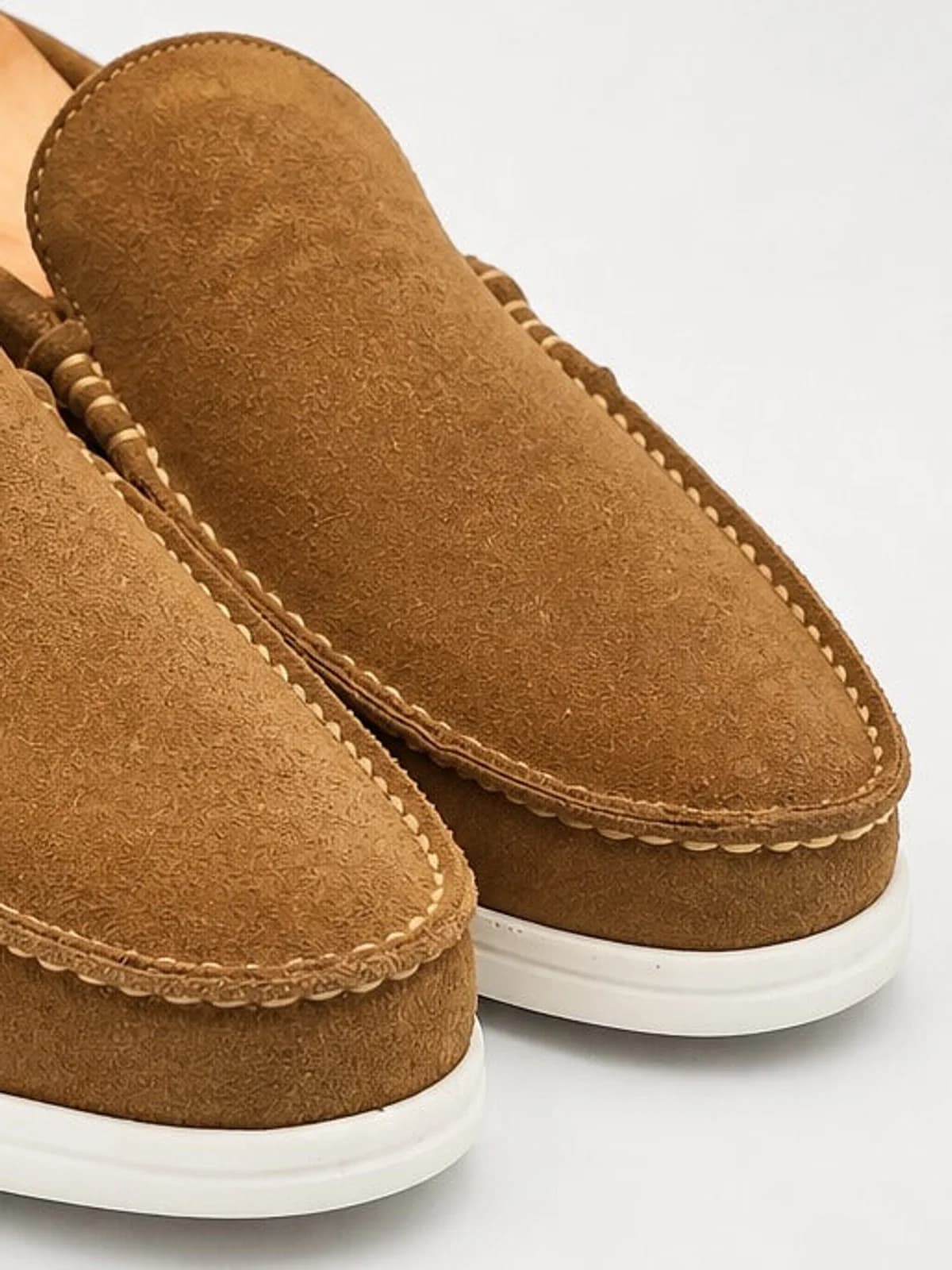
A week or two into wearing a new pair, a line appears across the front of the shoe where your foot bends. People message us about it. It is worth explaining properly, because that crease is the best proof you have that the leather is what we said it was.
Full-grain, corrected, and the gap between them
Full-grain is the outermost layer of the hide with its surface left intact. It keeps the original grain pattern, the density, and the small irregularities the animal actually had. It is the strongest part of the skin and the only part that develops a patina.
Corrected grain is the same hide after the surface has been sanded off to remove scars and marks, then embossed with a printed grain pattern and sealed under pigment. It looks flawless and identical on every pair. It also cannot breathe properly, and because the surface is a coating rather than the hide itself, it does not age — it wears through. That is the difference between leather that gets better and leather that eventually flakes.
A sealed, corrected shoe will not crease the way ours does. It will hold its shape and then, at some point, crack. Full-grain creases early and then keeps going for years.
Creasing is mechanical, not a defect
Your foot flexes roughly at the ball with every step. The leather over that point has to fold. It will fold along the same line each time, and that line becomes permanent. There is no leather on earth, at any price, that flexes thousands of times and stays flat.
You can influence how it looks. Shoes that fit properly crease into one or two clean lines. Shoes that are too big crease into a mess, because there is slack leather with nowhere to go — which is the real argument for getting the size right rather than sizing up for comfort. Using shoe trees between wears pushes the fold back out while the leather is still warm and damp, so the crease stays shallow instead of setting sharp.
Patina is the part worth waiting for
Over months, full-grain darkens unevenly. The flex points go deeper, the areas that catch light and polish come up glossier, and the colour shifts warmer overall. Where you walk, how much sun the shoe sees, how often you condition it — all of it shows up in the finish.
The result is a pair that stops looking like a product and starts looking like yours. It is also, unavoidably, why two pairs of the same shoe look different after a year.
What is actually a problem
Creasing, colour deepening and small surface marks are all normal. Dryness is not. If the leather starts to feel stiff and papery, or you see fine cracking inside a crease rather than a smooth fold, it has lost its oils — and in this climate that happens faster than most people expect.
A conditioner two or three times a year fixes it before it starts. Thin coat, clean cloth, let it absorb, then brush. That is the entire maintenance requirement for a pair that will otherwise outlast a decade of the alternative.
Keep reading
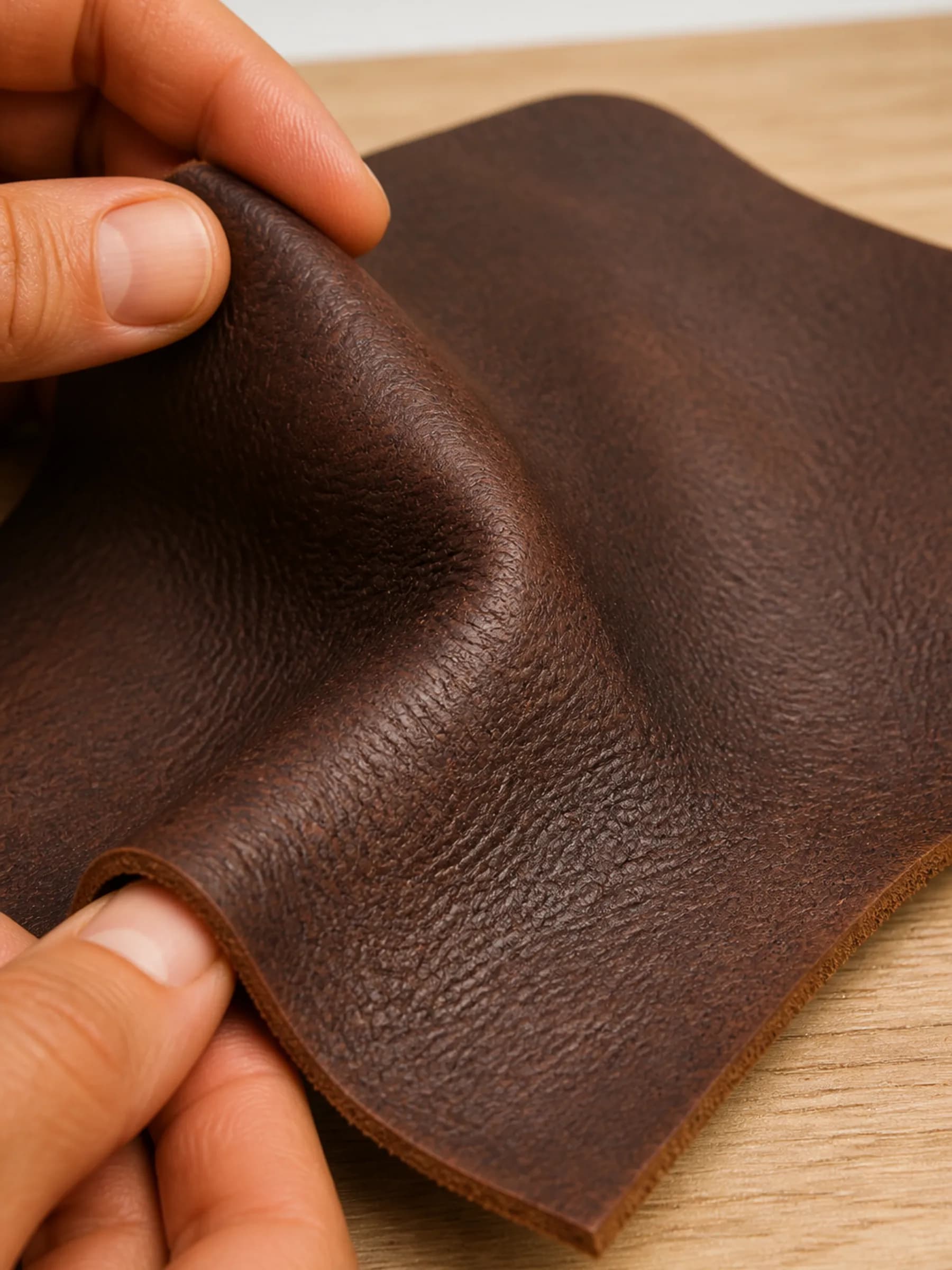
Why we stitch the apron by hand
The seam around the front of a moccasin is the shoe. Here is why a machine cannot do it well, and what that means for how the pair feels on day one.
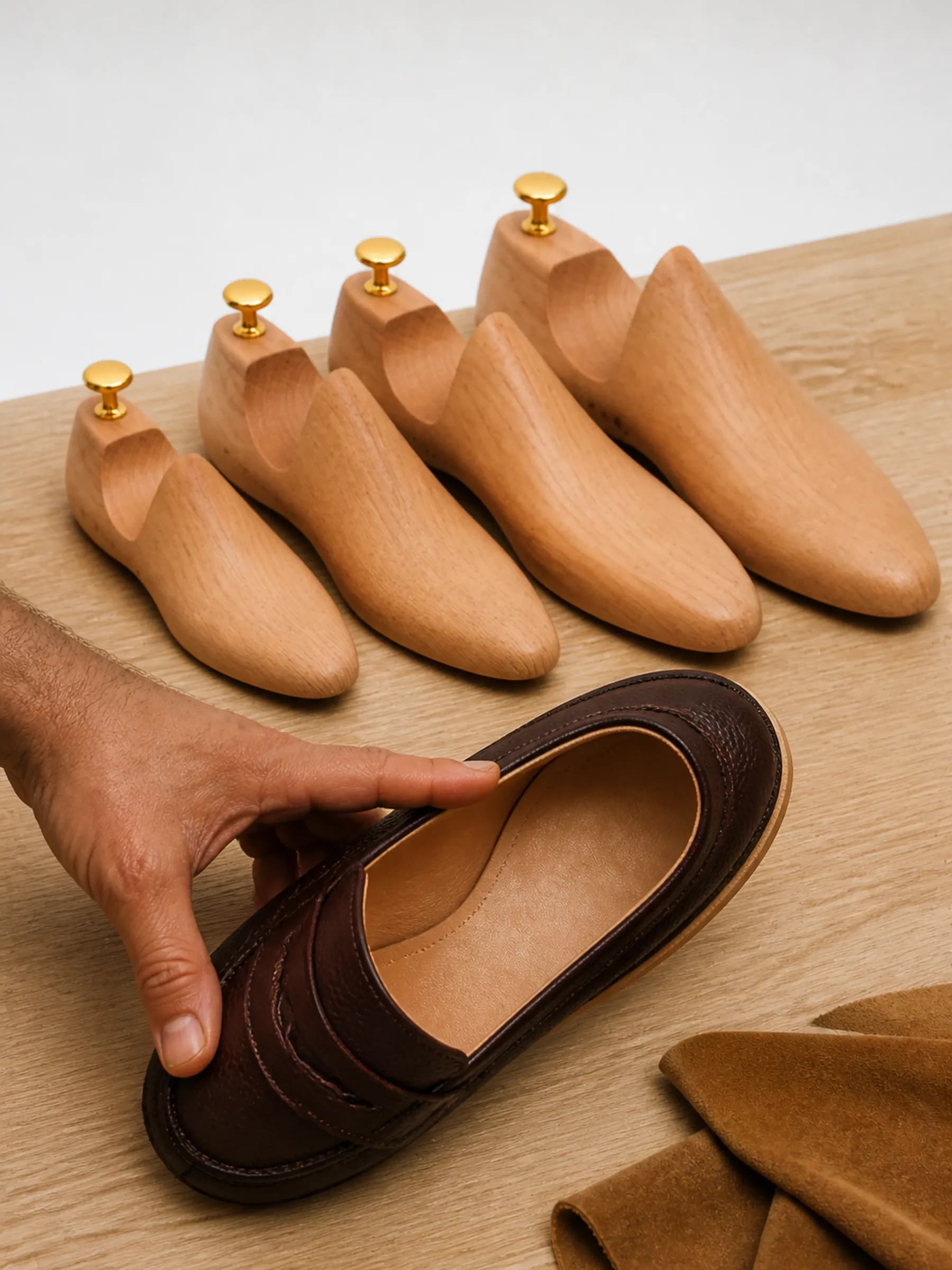
Suede in the Gulf
Heat, dust and air conditioning are harder on a suede loafer than rain ever was. What actually keeps a pair alive in the UAE.